Douglas A-20 — attack on „Robert Müller“, 27 November 1943
During the Second World War, the Soviet Union received thousands of aircraft, engines and other military equipment from the United States and Britain. Much of the American hardware was delivered under the Lend-Lease programme.
These aircraft also fought in the Baltic region. Some were shot down in combat, others were lost in accidents or during forced landings. A number of these aircraft still lie on the bottom of the Baltic Sea.
I am interested in one particular wreck, located near Vecāķi at a depth of 20 metres. I am also interested in its story — the aircraft type, the crew, the last flight, and the circumstances in which it came to rest on the seabed.
Here I gather my dives and historical research on this aircraft, the A-20. But what is this aircraft called?
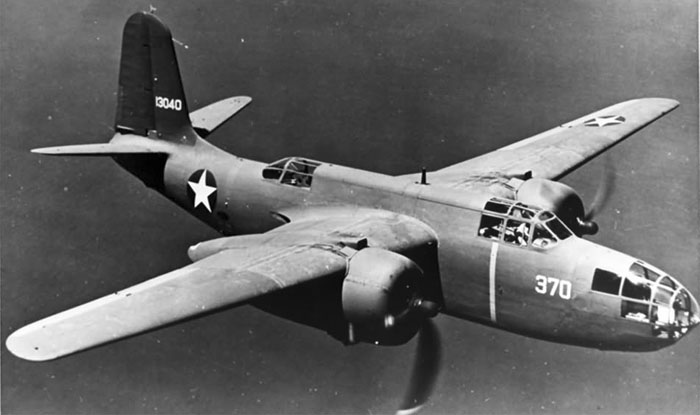
Douglas A-20 Havoc
The Douglas A-20 was an American twin-engine light bomber and attack aircraft, developed in 1938. The British RAF knew it as the Boston, while in US service it was called the Havoc.
The aircraft was originally designed to US Army Air Corps requirements, but the first large orders came from France and Britain. After the fall of France, part of the aircraft intended for France passed to the RAF.
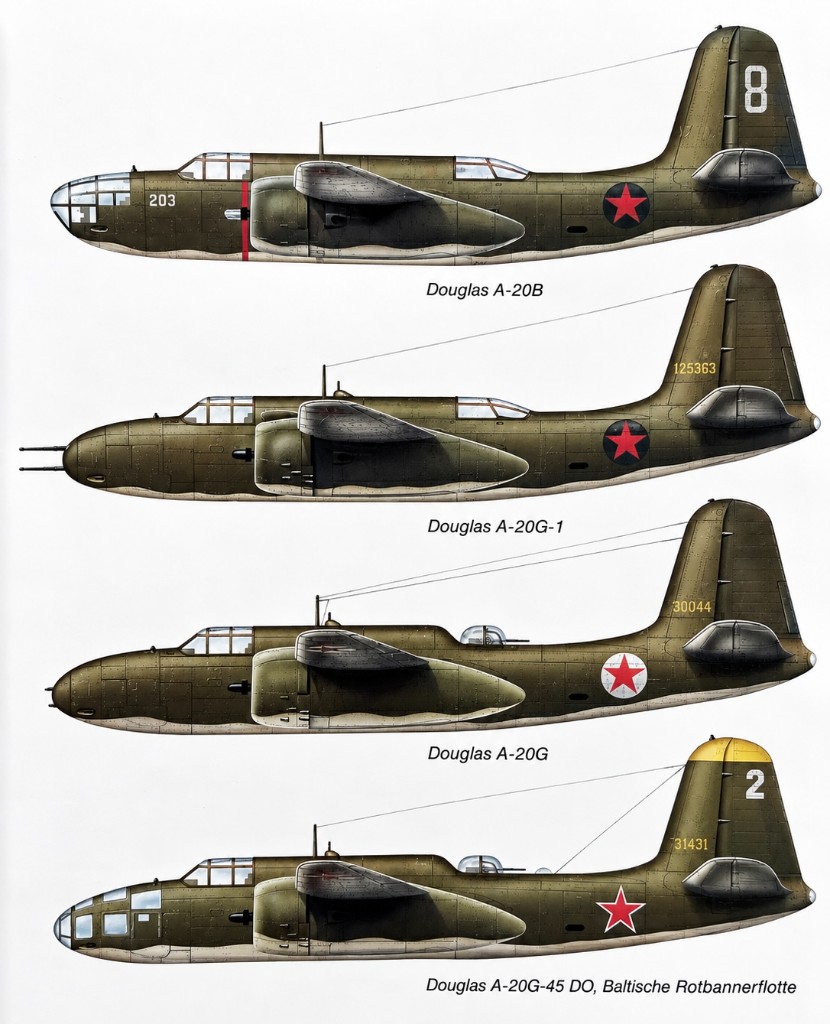
During the war the A-20 was continuously improved. The A-20G became one of the most widely produced versions — instead of a glazed bombardier nose it had a solid nose armed with cannon and machine guns. Later versions widely used 12.7 mm Browning machine guns.
A particularly important A-20 operator was the USSR, which received 3,125 aircraft under Lend-Lease. Many A-20G aircraft were delivered directly to Soviet aviation.
The A-20 proved to be a fast and versatile aircraft, used as a bomber, attack aircraft and night fighter. Various A-20 versions fought in Europe, the Mediterranean and the Pacific.
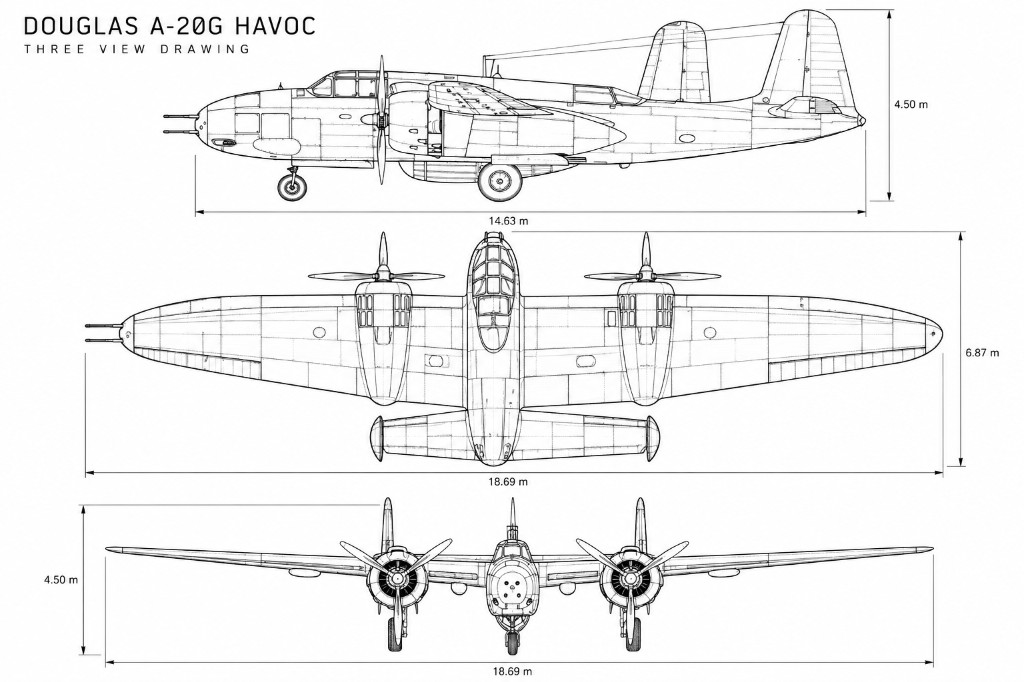
Douglas A-20G Havoc — technical data
| Parameter | Data |
|---|---|
| Wingspan | 18.69 m |
| Length | 14.63 m |
| Wing area | 43.20 m² |
| Empty weight | 7,700 kg |
| Max. take-off weight | 11,325 kg |
| Wing loading | 119.3 kg/m² |
| Engines | 2 × Wright R-2600-23 |
| Power | 1,192 kW each |
| Cruising speed | 392 km/h |
| Maximum speed | 532 km/h |
| Rate of climb | 11.5 m/s |
| Operational range | 1,740 km |
| Service ceiling | 7,200 m |
| Armament | 9 × 12.7 mm Colt-Browning machine guns |
| Bomb load | up to 1,814 kg |

Air gunner

Pilot, crew commander

Navigator
Dive to the Douglas wreck
The Attack on „Robert Müller“ — 27 November 1943
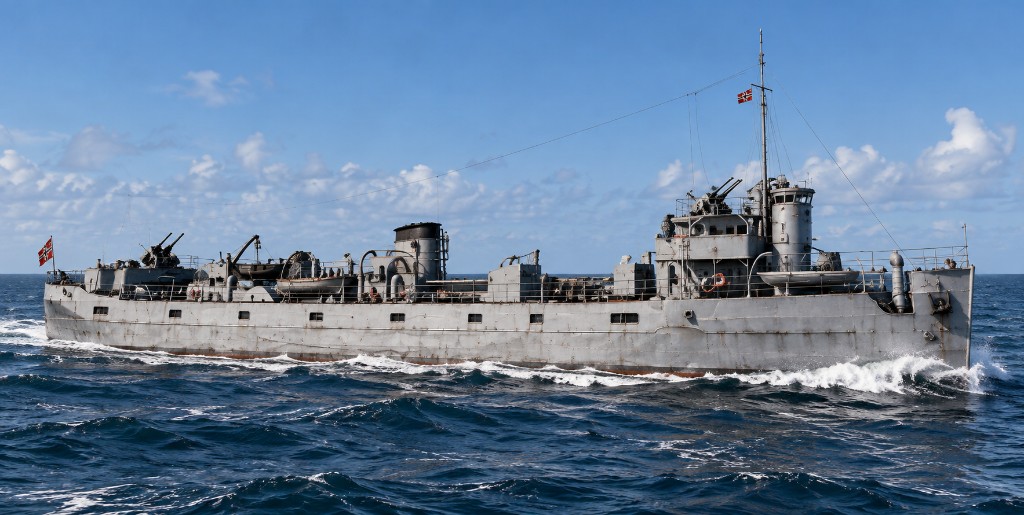
On 27 November 1943, a Soviet Baltic Fleet aircrew commanded by Pyotr Letunovsky set out on a combat mission over the Baltic Sea. Their task was to search for and destroy enemy shipping.
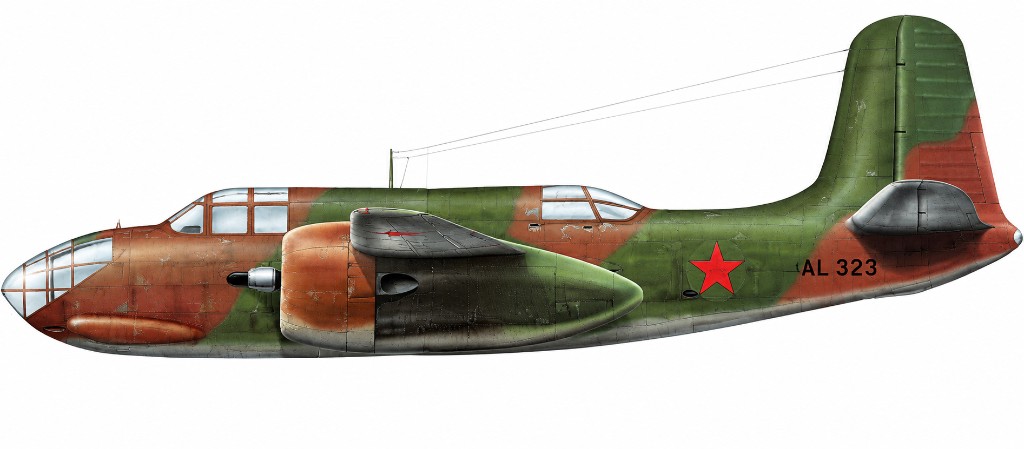
The crew flew a Douglas A-20 Boston torpedo bomber. The mission began at Kamenka airfield near Leningrad. Their route took them along the Estonian coast towards Pärnu, then across the Gulf of Riga and towards the coast of Courland.
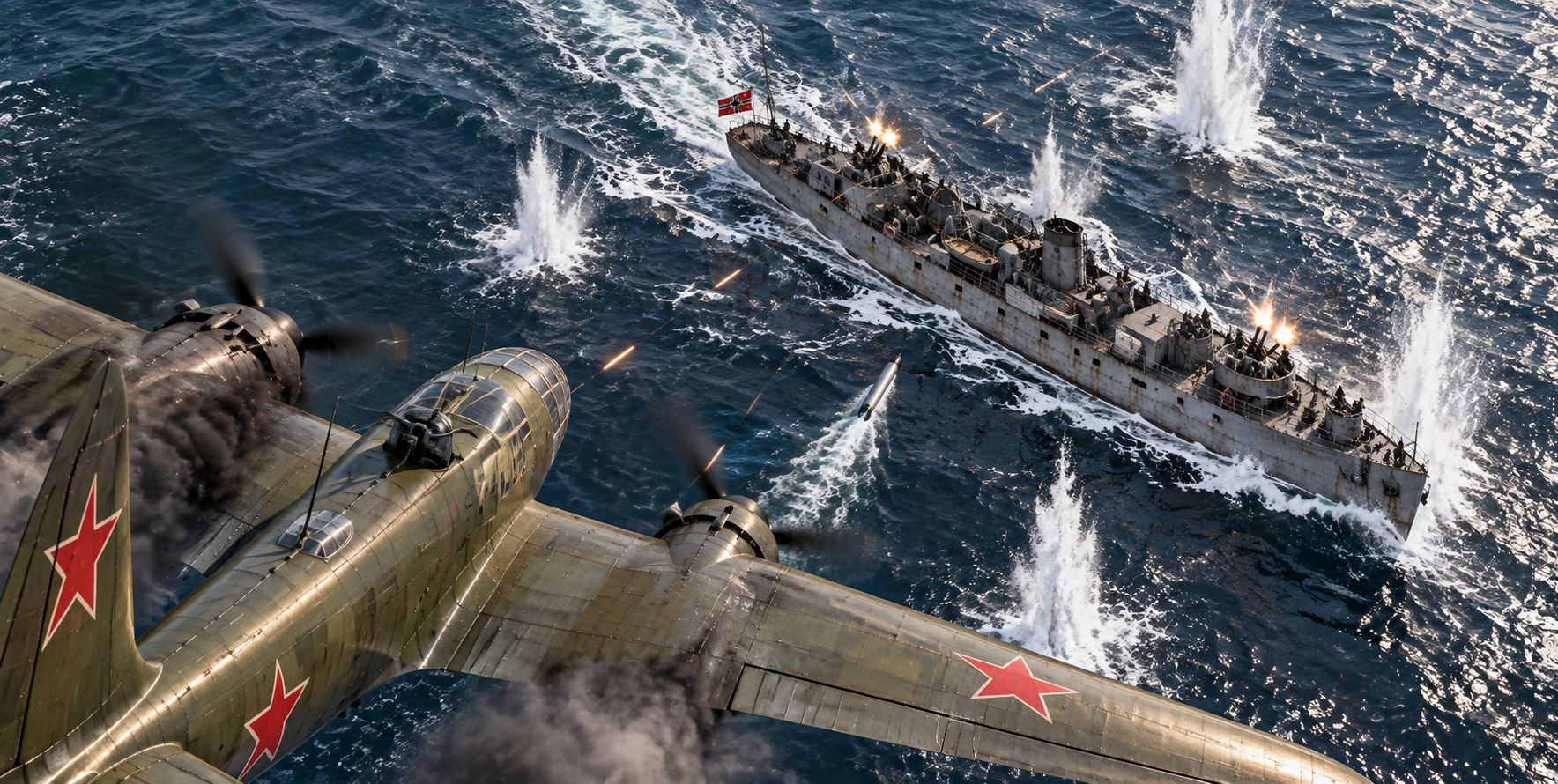
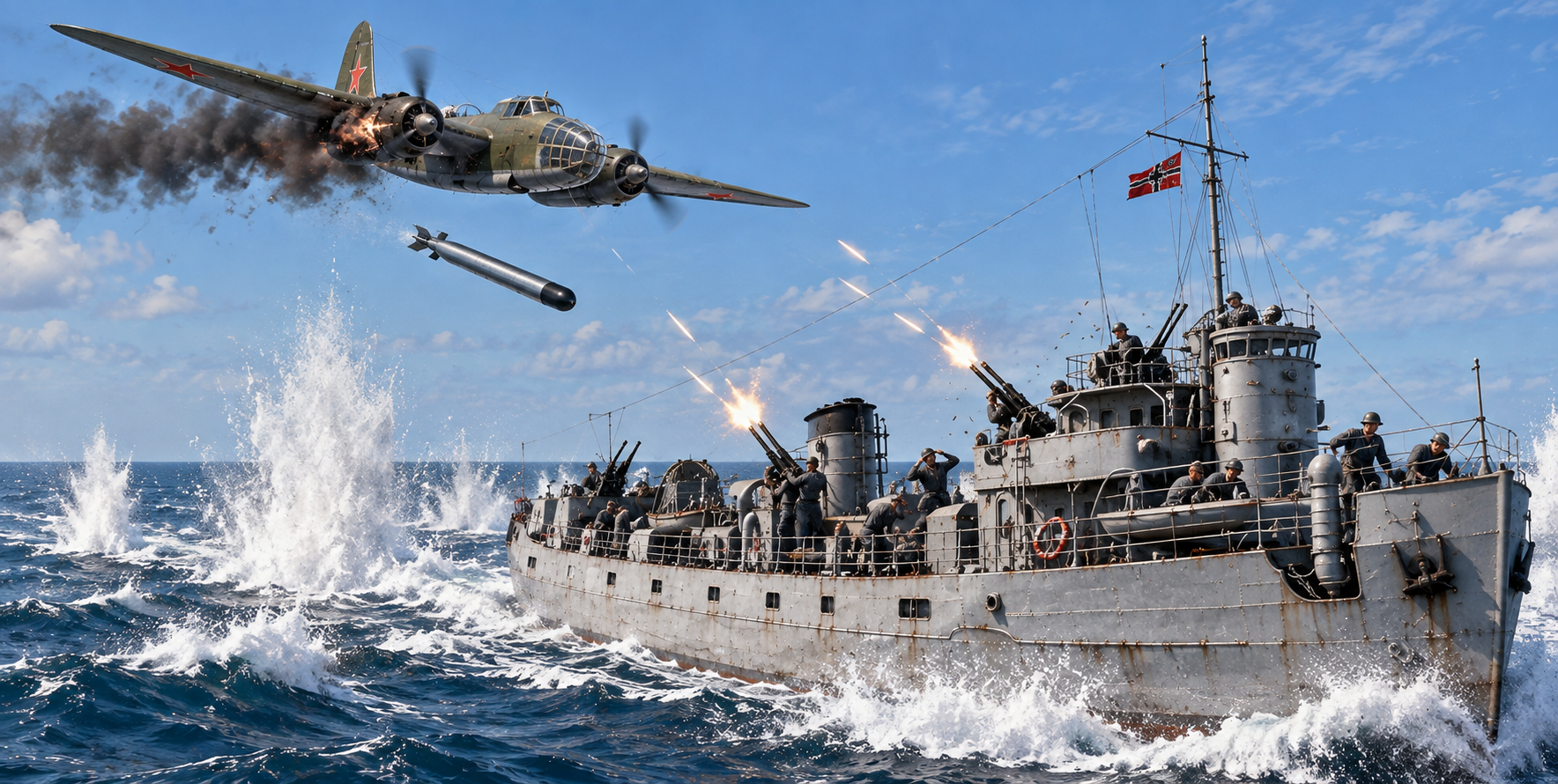
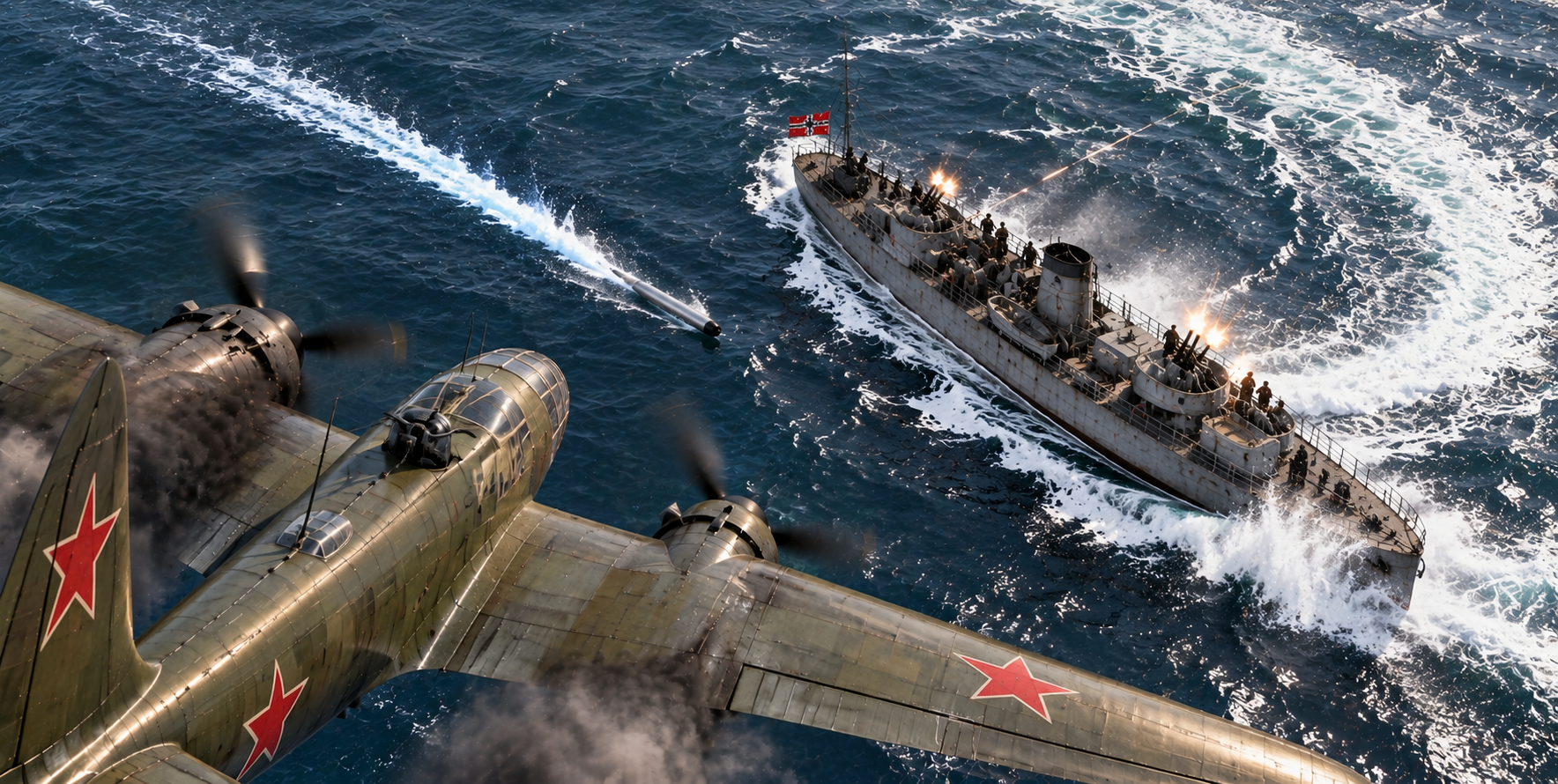
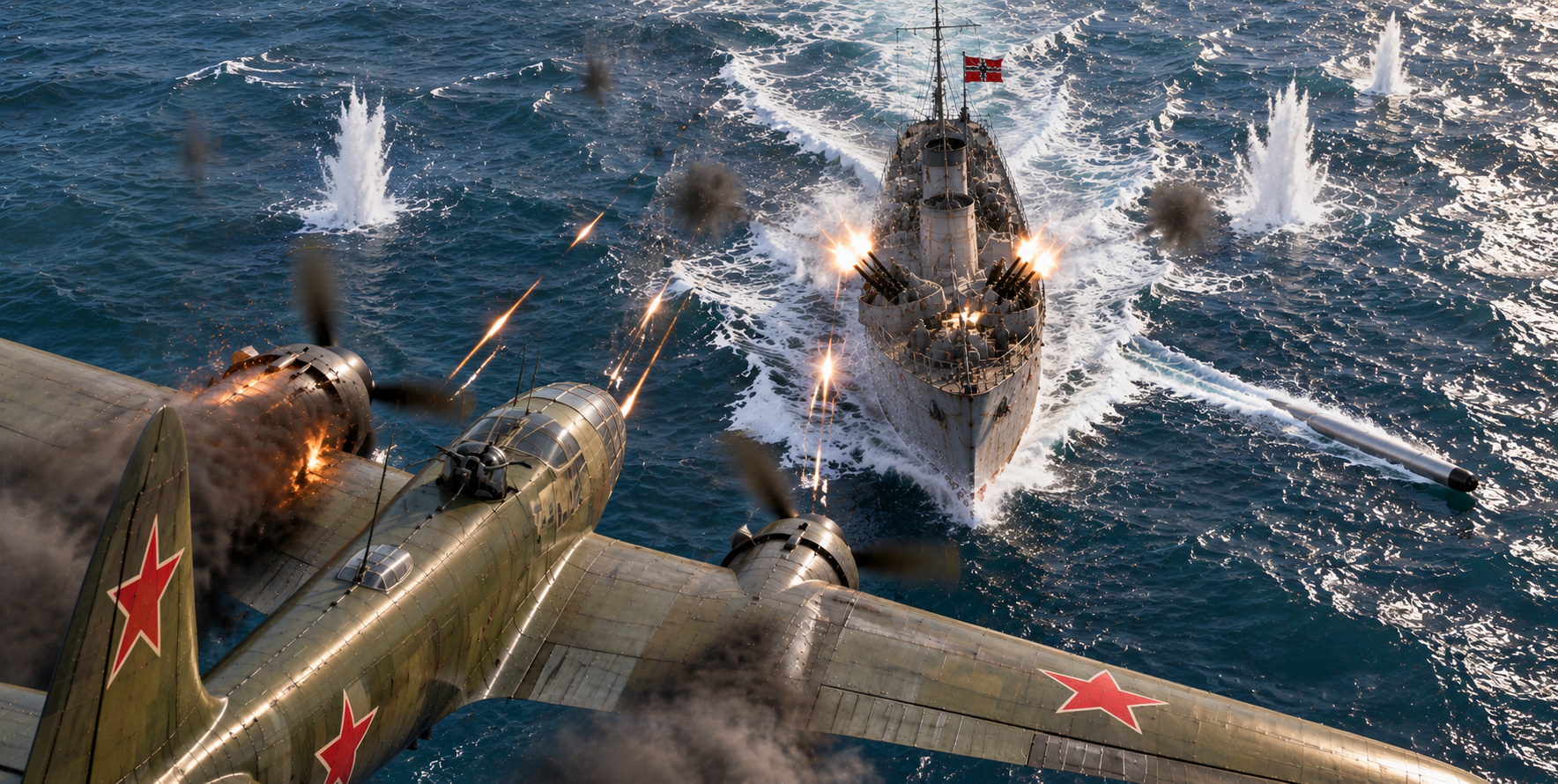
Near the Courland coast, the crew spotted a vessel — the German floating artillery battery „Robert Müller“. Letunovsky began his attack from very low altitude over the sea.
The A-20 approached the ship at low level. „Robert Müller“ opened fire on the aircraft. The vessel was armed with heavy 10.5 cm guns as well as lighter anti-aircraft weapons. It is not possible to establish with certainty which weapons were actually used against the aircraft during this particular attack.
As he approached the target, Letunovsky launched a torpedo. There is some uncertainty concerning the number of torpedoes used in the attack: one surviving attack diagram shows two torpedoes, while the German report mentions one torpedo. For this reason, it is safer to describe it simply as a torpedo attack rather than state with certainty that two torpedoes were launched.
The torpedo did not hit the ship directly. It exploded in the water approximately 20 metres from „Robert Müller“. After releasing the torpedo, the A-20 passed over the vessel and strafed it with its machine guns.
The attack was carried out at extremely low altitude. The aircraft was hit by defensive fire, but Letunovsky managed to continue flying away from the ship. On the return flight, the situation became increasingly difficult. The aircraft had sustained damage and could no longer continue the flight normally.
The crew was eventually forced to ditch in the Gulf of Riga. After the emergency landing on the water, the aircraft began to sink. The crew abandoned it and entered the water.
The attack on „Robert Müller“ on 27 November 1943 therefore ended without the destruction of the ship, but with the loss of the A-20 Boston in the Gulf of Riga.
More than 80 years later, this combat mission remains particularly interesting from the perspective of underwater history because the aircraft itself remained on the seabed — a physical trace of this attack.
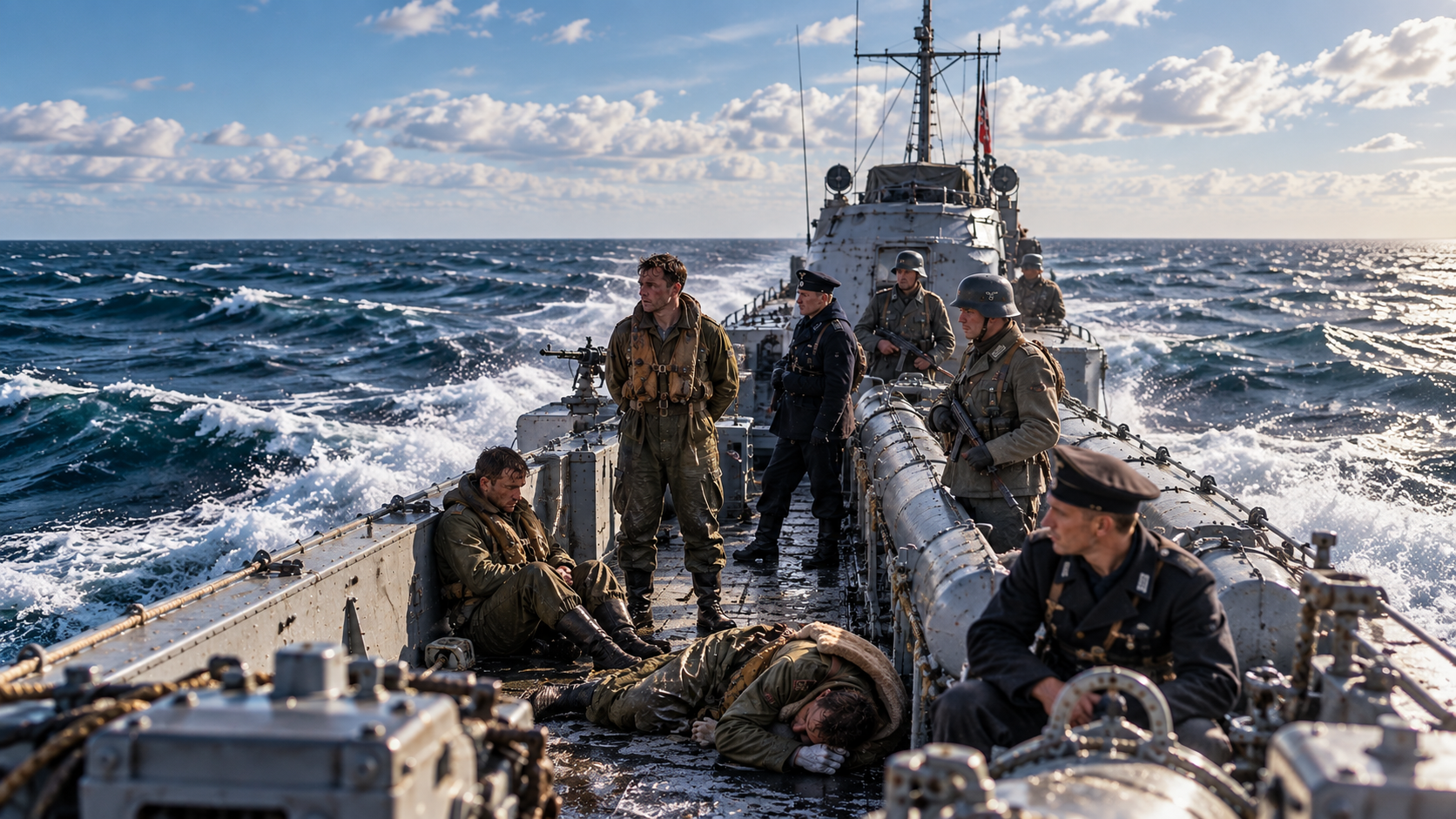
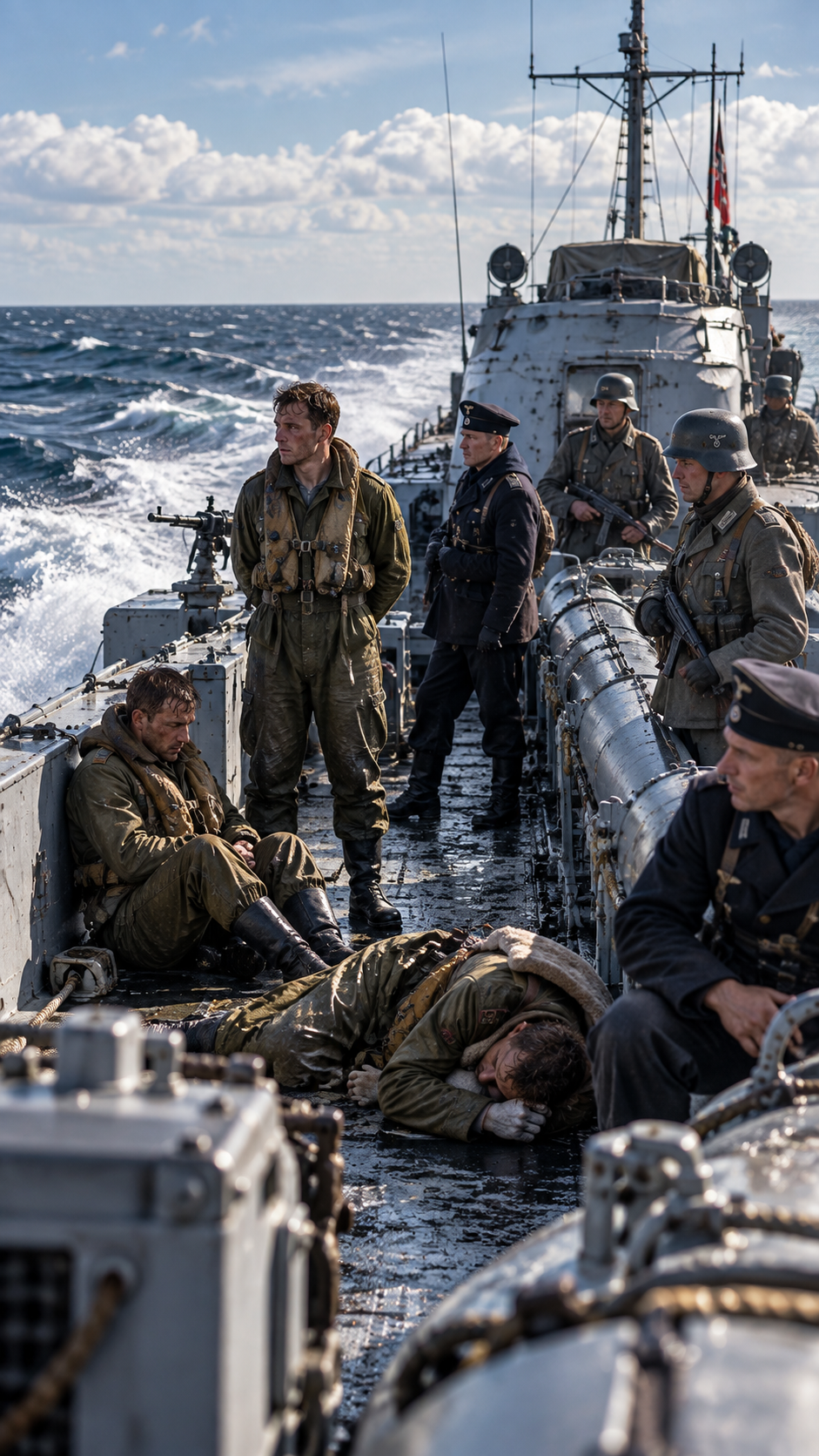
Reconstructed scenes (AI-assisted imagery)
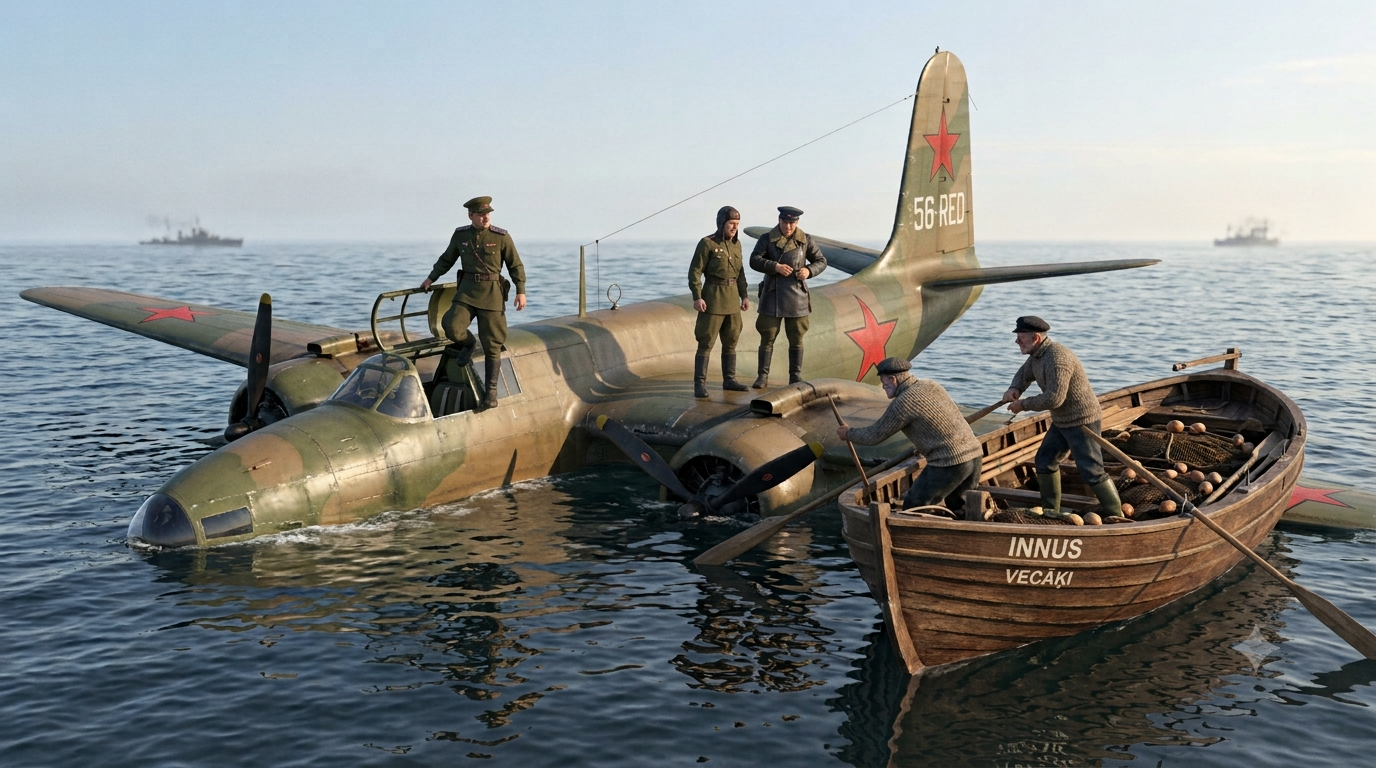
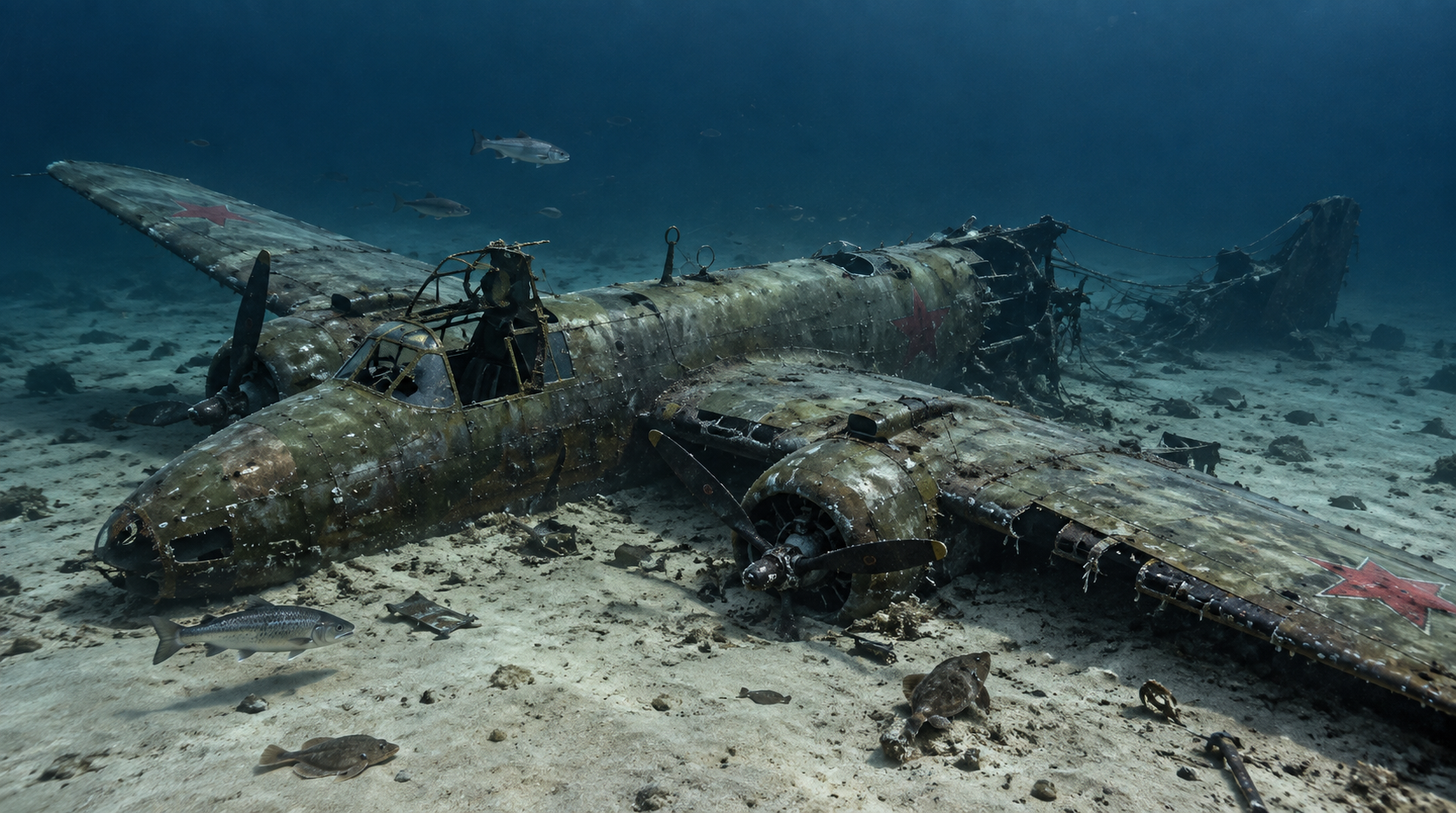
Boston A-20 — ditching in the Gulf of Riga
Boston A-20 vs. floating battery Robert Müller — 27 November 1943
On the way to the dive — with Mārtiņš Šaiters
Descent to the Douglas wreck